Going Barefoot
Did you know that going barefoot is really important? Check out some of the benefits and tips for fun ways to engage kids in barefoot walking:
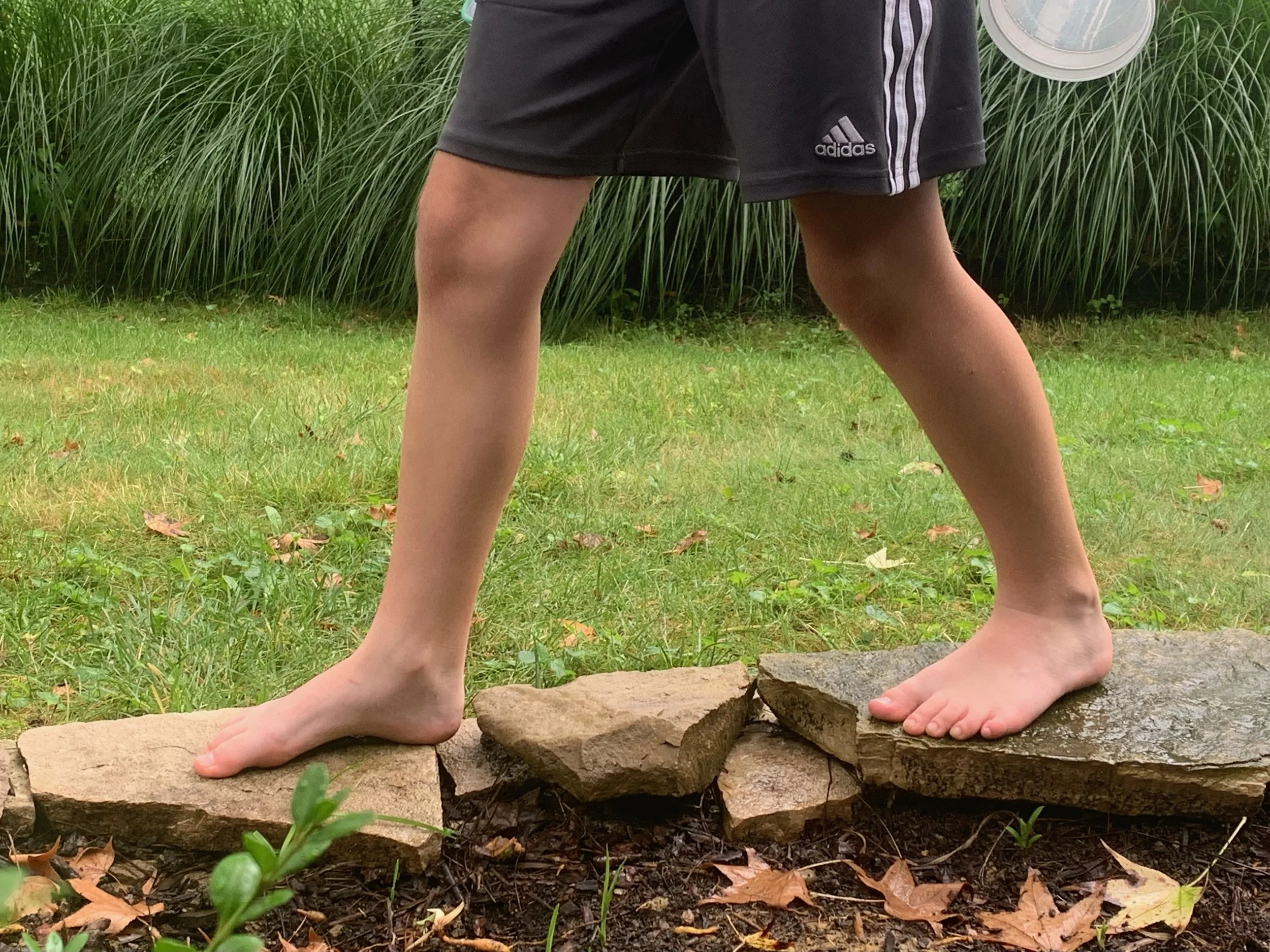
Sensory Exploration
Each foot contains thousands of nerve endings that send valuable sensory information to the brain, helping your child make sense of the world around them. Walking barefoot across different surfaces, such as dirt, mud, rocks, and sand, provides rich sensory input that supports sensory-motor development. Barefoot walking also enhances proprioception, the body’s ability to perceive its own position in space, by allowing the feet and ankles to receive information from the environment. This increased sensory input helps build balance, coordination, motor control, and other foundational motor skills.
Foot Development
Children are not born with fully developed adult feet. At birth, their feet are soft, flat, and made largely of cartilage. As children grow, the bones in their feet gradually harden, with the primary bones becoming more developed by around age 3. Foot development continues throughout childhood and into early adulthood as the bones mature and fuse. Because children’s feet are still developing, providing opportunities for natural movement is important. Walking barefoot helps strengthen the muscles in the feet, improve flexibility, and support healthy arch development. Walking on uneven surfaces encourages the feet to adapt to changing terrain, promoting strength, stability, and balance, and thereby may prevent injuries.
Footwear
While it is not practical for children to go barefoot at all times, it is beneficial for them to spend time barefoot whenever it is safe to do so. Wearing shoes constantly, particularly poorly fitted shoes, may restrict natural movement and impact healthy arch development. Over time, this can contribute to changes in gait and increase the risk of foot problems. Shoes also dampen sensory feedback from the ground, affecting tactile and proprioceptive input that helps the brain make sense of the environment. Providing regular opportunities for barefoot play can help strengthen the feet and ankles and encourage children to move with greater balance, coordination, and confidence.
Ideas for Barefoot Play
Here are a few suggestions for including barefoot play for children of all ages:
Make sure to look for any sharp objects ahead of time and choose areas with smooth/soft surfaces, especially if you and your child are new to barefoot walking
Create a small path in your yard including logs, smooth stones, soft moss, pine needles, sand, and grass to walk across varying natural elements
Take walks in creeks or mud puddles with shoes off
Create a sandbox or let your child walk in the wet morning grass…this can be a fun way to get morning sunlight (great for supporting sleep too!) before school
Encourage walking across stable fallen logs and climbing low branches barefoot to support development of foot muscles
Make footprint art with paint on a large piece of recycled paper or cardboard box; if your child is hesitant with the paint, try using flour on a black piece of paper instead
Indoors: offer lots of opportunities for walking over various surfaces including wood, tile, carpet, a yoga mat, bubble wrap, or rugs of various textures
*Thanks to Morgan Mahan, 2026 OTD Capstone Student with Forestways OT, for assisting with the information for this post.
